
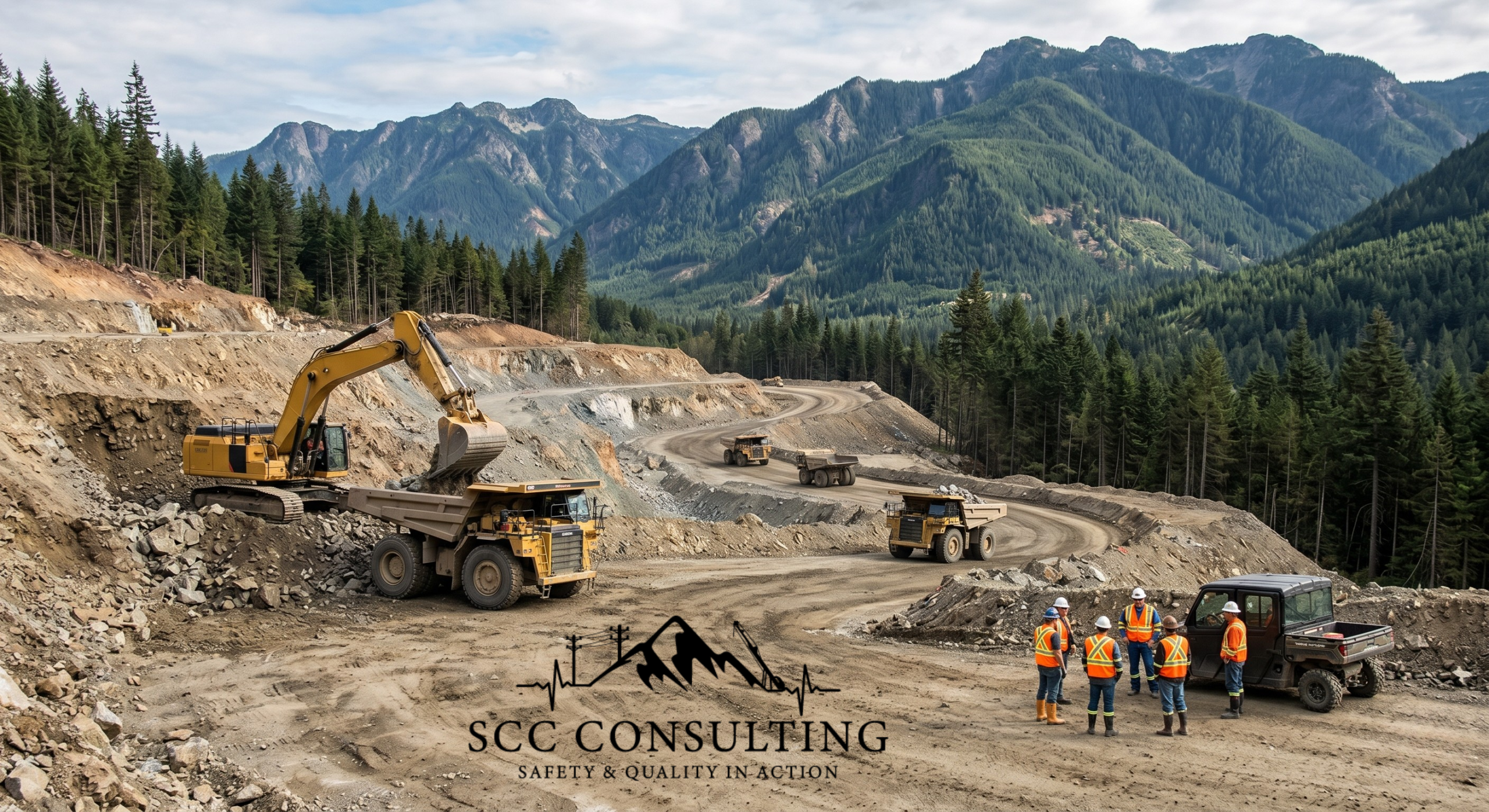
The mining industry in British Columbia continues to grow rapidly—but so does the pressure to meet safety and compliance expectations.
Many mining companies believe they are compliant—until they are audited.
At SCC Consulting, we’ve worked with mining operations across British Columbia that believed their safety systems were solid—only to uncover critical gaps during audit preparation.
In several cases, these gaps have resulted in:
- Failed COR audits
- Lost contract opportunities
- Increased scrutiny from clients and insurers
In most situations, the issue is not a lack of effort—it is a lack of alignment between:
- HSE programs
- Field execution
- Audit expectations
When these elements are not aligned, even well-developed safety systems begin to break down under real-world conditions.
This article outlines the most common safety failures we are seeing across mining operations in British Columbia—and how to correct them before they impact your operation.
1. Incomplete or Outdated HSE Programs
The Problem
We’ve reviewed mining operations in British Columbia where HSE programs appeared complete on paper—but failed to meet audit expectations due to outdated or misaligned procedures.
- Programs not updated to reflect current operations
- Generic templates instead of site-specific systems
- Procedures that do not match actual field work
Why It Matters
Mining safety compliance in British Columbia requires programs that are current, site-specific, and actively used. Outdated documentation is one of the fastest ways to lose credibility during an audit.
How to Fix It
- Conduct annual HSE program reviews
- Align documentation with real operations and hazards
- Implement document control systems
2. Weak Field-Level Implementation
The Problem
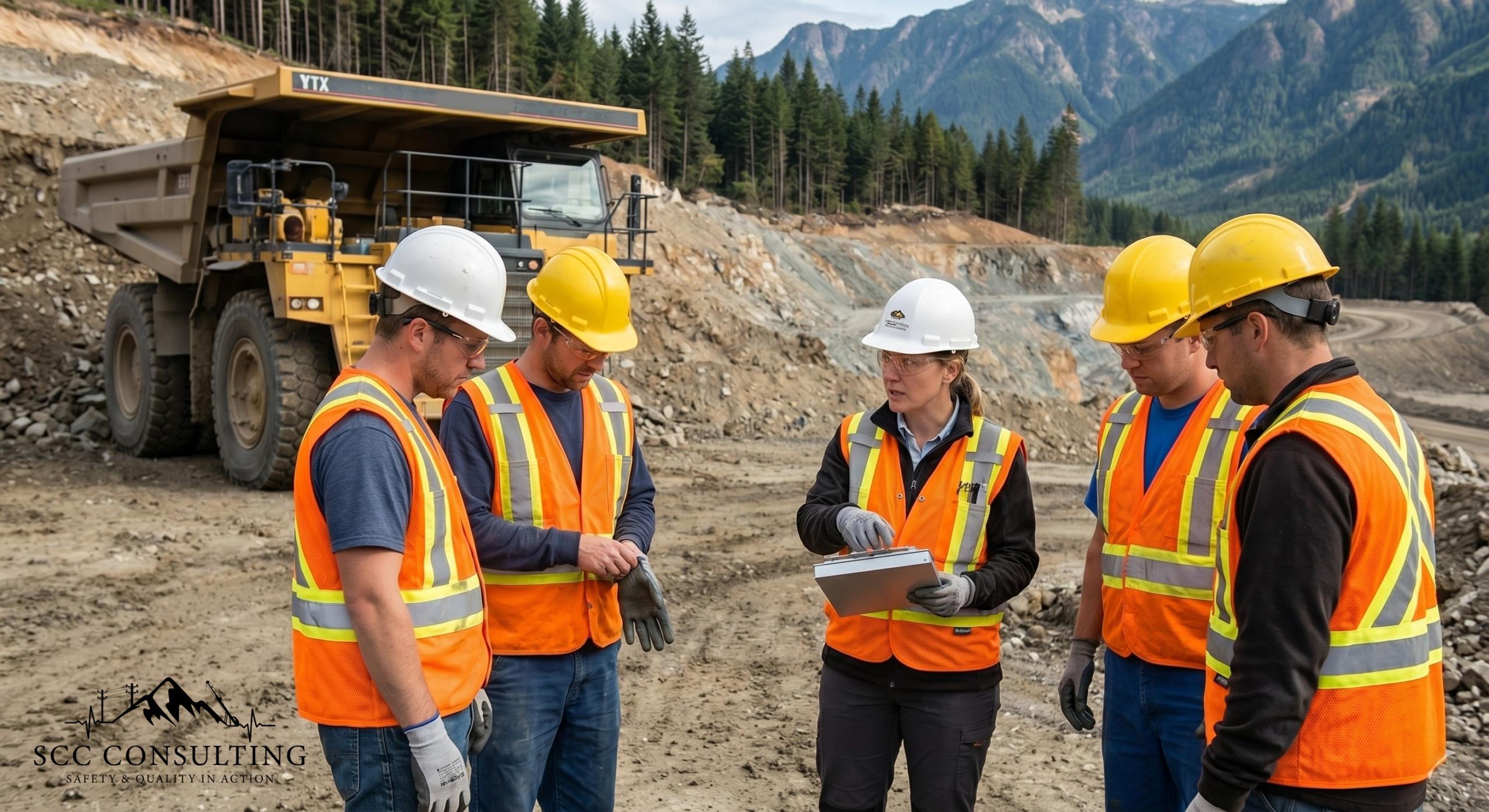
Even strong safety programs fail when they are not consistently applied in the field. We regularly see a disconnect between written procedures and actual site practices.
- Procedures not consistently followed
- Toolbox talks treated as routine tasks
- Production prioritized over safety enforcement
Why It Matters
Audits evaluate real-world execution—not just documentation. If safety practices are not being followed, the system is considered ineffective.
How to Fix It
- Establish clear supervisor accountability
- Conduct regular field inspections and observations
- Improve the quality and relevance of toolbox talks
3. Poor Incident Reporting and Near-Miss Tracking
The Problem
Underreporting remains one of the most common and most overlooked issues in mining safety systems.
- Near-misses not reported
- Reporting systems too complex or time-consuming
- Lack of follow-up on reported issues
Why It Matters
Near-misses are early warning signs. When they are not captured and addressed, the same hazards often lead to more serious incidents.
- Hazards remain unaddressed
- Patterns go unnoticed
- Risk exposure increases over time
How to Fix It
- Implement simple and accessible reporting systems
- Encourage a no-blame reporting culture
- Track and follow through on corrective actions
4. Lack of Audit Readiness

The Problem
Many mining companies operate reactively when it comes to audits—only addressing gaps when deadlines are approaching.
- Last-minute document preparation
- Missing or incomplete records
- Disorganized safety systems
Why It Matters
We’ve seen operations in British Columbia lose project opportunities or delay certification due to audit failures that could have been prevented.
Audit readiness is not a one-time effort—it requires ongoing system management.
How to Fix It
- Maintain audit-ready systems year-round
- Conduct internal audits on a regular schedule
- Keep documentation organized and accessible
5. Gaps in Training and Competency Tracking
The Problem
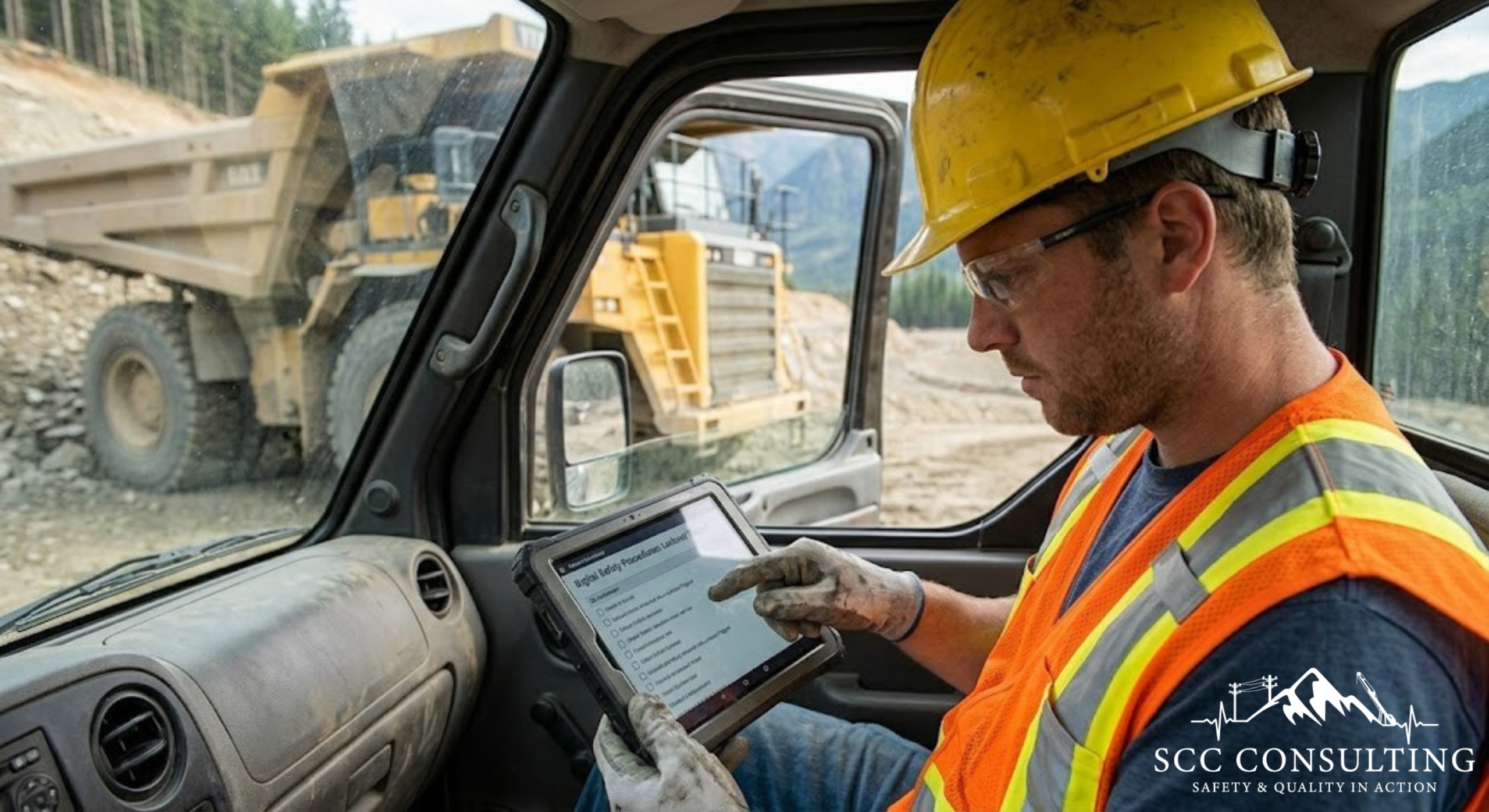
Training is often completed—but not consistently tracked or verified.
- Expired certifications
- Missing training records
- No centralized tracking system
Why It Matters
In mining environments, competency is critical. When training is not properly tracked, companies expose themselves to significant safety and liability risks.
- Unqualified work increases risk
- Audit deficiencies become more likely
- Liability exposure increases
How to Fix It
- Develop a training and competency matrix
- Track certifications and expiry dates
- Use centralized systems for record management
Conclusion
Mining safety compliance in British Columbia is becoming more demanding—and more important than ever.
The companies that succeed are not the ones reacting to issues. They are the ones proactively managing their safety systems, maintaining audit readiness, and ensuring alignment between documentation and field execution.
How SCC Consulting Can Help
If you’re operating a mining site in British Columbia, the question is not whether gaps exist—it’s whether they’ve been identified.
SCC Consulting helps mining companies:
- Identify hidden compliance gaps
- Prepare for COR and client audits
- Build practical, field-ready HSE systems
If you are preparing for an audit—or unsure where your operation stands—now is the time to find out.