
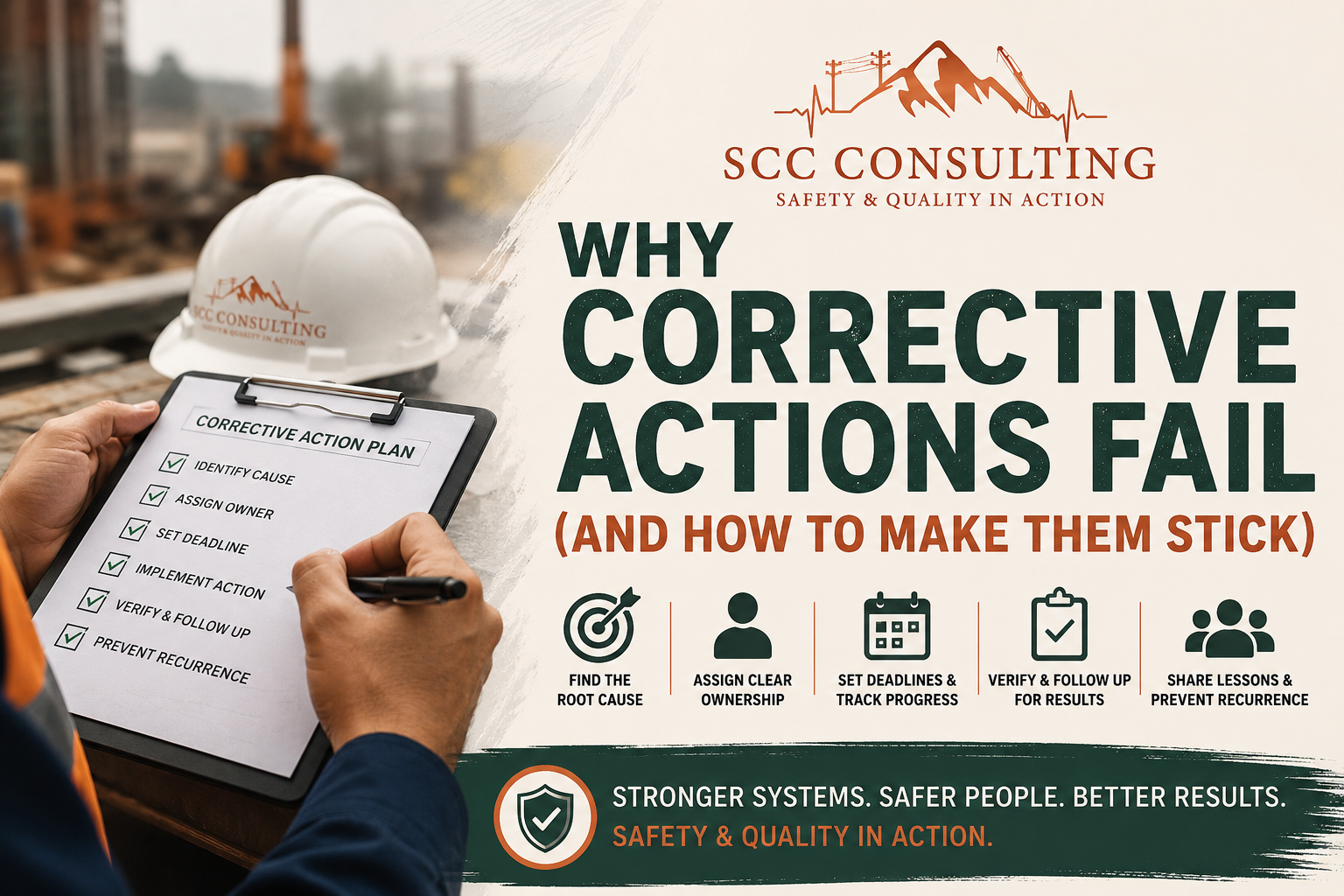
Corrective actions are one of the most important tools in any health, safety, and environmental (HSE) management system. Whether they originate from an incident investigation, workplace inspection, hazard report, audit finding, or near-miss event, corrective actions are intended to address problems before they lead to more serious consequences.
Yet many organizations continue to experience the same issues repeatedly. The same hazards appear during inspections. The same audit findings return year after year. The same incidents occur despite previous corrective actions being documented and marked as completed.
The problem is not always the corrective action itself. More often, it is the process surrounding it.
The Purpose of a Corrective Action
A corrective action is more than a task assigned to satisfy an audit requirement or close an incident report. Its purpose is to eliminate or reduce the underlying cause of a problem and prevent recurrence.
- Reduce workplace risks
- Prevent repeat incidents
- Improve regulatory compliance
- Strengthen safety culture
- Demonstrate due diligence
- Improve operational efficiency
Common Reason #1: The Root Cause Was Never Identified
One of the most common reasons corrective actions fail is that organizations focus on symptoms instead of causes.
For example, if a worker slips on an icy walkway, the immediate corrective action might be to spread sand or salt. While this addresses the immediate hazard, it does not explain why the walkway became unsafe in the first place.
- Was there a winter maintenance procedure?
- Was responsibility clearly assigned?
- Were inspections being completed?
- Were weather conditions being monitored?
Without identifying the underlying cause, the same issue is likely to occur again.
Common Reason #2: Ownership Is Unclear
Many corrective actions fail because nobody is clearly responsible for completing them.
- A designated owner
- A clear due date
- Defined expectations
- Follow-up requirements
Common Reason #3: Completion Is Assumed, Not Verified
A corrective action should not be considered complete simply because someone states that it has been done.
- Training was delivered
- Attendance was documented
- Workers understood the material
- New procedures are being followed in the field
Common Reason #4: Corrective Actions Are Treated as Paperwork
Many organizations unintentionally view corrective actions as administrative requirements rather than risk reduction measures.
Common Reason #5: There Is No Follow-Up Process
Even well-designed corrective actions can fail if they are never revisited.
- Scheduled follow-ups
- Progress reviews
- Effectiveness evaluations
- Ongoing monitoring
Common Reason #6: Lessons Learned Are Not Shared
Sharing lessons learned helps reinforce expectations and prevent similar incidents from occurring elsewhere within the company.
How to Make Corrective Actions Stick
Identify the Root Cause
Look beyond the immediate issue and determine why it occurred.
Assign Clear Ownership
Every action should have one responsible individual.
Establish Deadlines
Set realistic timelines and track progress.
Verify Completion
Confirm actions were implemented as intended.
Evaluate Effectiveness
Determine whether risk was actually reduced.
Communicate Lessons Learned
Share information with workers and management.
Final Thoughts
Corrective actions are not intended to close reports—they are intended to prevent problems from happening again.
The true measure of a corrective action is not whether it was documented. It is whether the risk was actually reduced.
Need Help Strengthening Your Safety System?
At SCC Consulting, we help organizations strengthen their safety management systems through practical compliance support, program development, digital safety solutions, and audit preparation services designed to create lasting improvements—not just completed paperwork.